

- English
- ελληνικά
- Esperanto
- Afrikaans
- tiếng Việt
- Italiano
- שפה עברית
- Cymraeg
- العربية
- Gaeilge
- český
- Eesti Keel
- Galego
- Indonesia
- Español
- русский
- Nederlands
- Português
- Norsk
- Türkçe
- Lietuvos
- Latviešu
- Pilipino
- ภาษาไทย
- Română
- icelandic
- Polski
- беларускі
- Français
- български
- український
- Hrvatski
- Deutsch
- Kreyòl ayisyen
- Dansk
- فارسی
- हिन्दी
- Suomi
- magyar
- 日本語
- 한국어
- Svenska
- Slovenský jazyk
- Malti
- Malay
- አማርኛ
- Bosanski
- Latine
- ລາວ
- Hawaiian
Could an Automatic Winding Machine Be the Upgrade Your Gasket Workshop Needs?
The industrial gasket manufacturing sector is undergoing a significant transformation. With the global industrial gaskets market valued at approximately $12.8 billion in 2025 and projected to reach $21.08 billion by 2034, growing at a CAGR of 5.7%, producers worldwide are facing increasing pressure to scale production while maintaining rigorous quality standards. The Asia Pacific region alone is expected to grow from $4.75 billion in 2025 to $6.43 billion by 2030 at a CAGR of 6.3%, indicating substantial demand for sealing solutions across refining, petrochemical, chemical processing, and power generation industries.
Spiral wound gaskets (SWGs) remain among the most widely used sealing solutions for raised face flanges in demanding industrial applications. They consist of alternating plies of metal winding (typically stainless steel) and filler material such as flexible graphite or polytetrafluoroethylene (PTFE) wound into a spiral shape, offering excellent compression recovery and sealing performance across a wide range of temperatures and pressures.
However, achieving consistent gasket quality demands more than just basic winding capabilities. Many workshops continue to rely on manual or semi-automatic winding processes, leading to variability in winding density, filler distribution, and final product integrity. This raises an important question for gasket manufacturers: Could an automatic winding machine be the upgrade your gasket workshop needs?
Understanding the Core Challenges in Spiral Wound Gasket Production
Before exploring automation solutions, it is essential to understand the key pain points that plague traditional gasket manufacturing operations. Production managers and workshop operators consistently report the following challenges:
Manual Winding Inconsistencies
Manual winding processes introduce significant variability into gasket production. The tension applied to metal strips, the density of filler material, and the uniformity of winding pitch can vary dramatically between operators and even between batches produced by the same operator. According to technical literature, current manufacturing quality of spiral wound gaskets often does not reach industrial standards, with different fillers exhibiting diverse mechanical and sealing properties depending on manufacturing precision.
Research has demonstrated that winding density significantly influences sealing behavior. Compression tests do not necessarily correlate directly with optimum sealability for spiral wound gaskets—consistent winding parameters are crucial for achieving reliable performance across production batches.
Quality Control and Compliance Burdens
Adherence to international standards such as ASME B16.20, ASME B16.5, BS1560, and ASME B16.47 is mandatory for gaskets used in critical applications like oil and gas pipelines, refineries, and chemical plants. Compliance requires documented strip thickness (typically 0.15–0.25mm), controlled winding pitch, and proper material selection for inner and outer guiding rings.
Manual operations make it difficult to consistently document and trace these parameters. Each gasket requires verification of filler thickness, winding density, and spot welding integrity—tasks that become increasingly time-consuming as production volumes scale.
Labor Intensity and Skill Gaps
Traditional spiral wound gasket production demands experienced operators who understand the nuances of metal strip feeding, filler material handling, and tension control. The learning curve is steep, and experienced personnel are becoming harder to find as the manufacturing workforce ages. Semi-automatic winding machines often cannot measure diameter or number of turns, cannot adjust steel belt tension, and ultimately compromise product quality.
Additionally, labor costs continue to rise across major manufacturing regions. Workshops that cannot improve per-operator productivity face shrinking profit margins even as market demand grows.
How Automation Transforms Spiral Wound Gasket Manufacturing
Automatic winding machines address each of these challenges systematically. Modern automatic winding machines for spiral wound gaskets incorporate features that fundamentally change production capabilities.
Precision Control Through Programmable Systems
Advanced automatic winding machines utilize programmable logic controllers (PLC) or computerized numerical control (CNC) systems to govern every aspect of the winding process. Operators input target dimensions, filler density parameters, and winding speed settings—and the machine executes the entire sequence automatically.
- Diameter control: Fully automatic winding machines provide precise outer diameter control devices that improve the stability of product quality. Operators simply load raw materials, input the required data and gasket quantity, and the machine automatically feeds graphite filler and steel hoop to complete production.
- Spot welding automation: Modern automatic winding machines incorporate automatic spot welding functions that ensure consistent weld placement and penetration—eliminating a major source of manual variability.
- Filler feeding optimization: Newly designed guide components for graphite filler help achieve perfect gasket finishing on both sides, ensuring uniform filler distribution throughout the winding process.
Productivity Gains from Multi-Machine Operation
One of the most compelling advantages of automatic winding machines is their ability to enable multi-machine supervision. A single operator can oversee multiple automatic winding machines simultaneously, dramatically increasing output per labor hour. Some automatic spiral wound gasket machine configurations allow one operator to monitor five machines concurrently, with production rates reaching as low as 12 seconds per piece for standard sizes.
For larger diameter gaskets, automatic horizontal winding machines equipped with servo motors to drive forming rollers solve the main problem of gasket flatness—a common issue when producing large-sized spiral wound gaskets. These machines automatically control gasket size, perform spot welding, and cut steel hoop without operator intervention during the production cycle.
Consistency Across Production Batches
When a workshop transitions to automatic winding equipment, the variability between batches collapses dramatically. The same program produces the same result every time—whether the machine runs one gasket or one thousand. This consistency is particularly valuable for gasket workshops supplying industries with strict quality requirements, including:
- Hydrocarbon processing and refining
- Petrochemical processing
- Chemical manufacturing
- Power generation
- Pulp and paper
- Oil and gas exploration and transportation
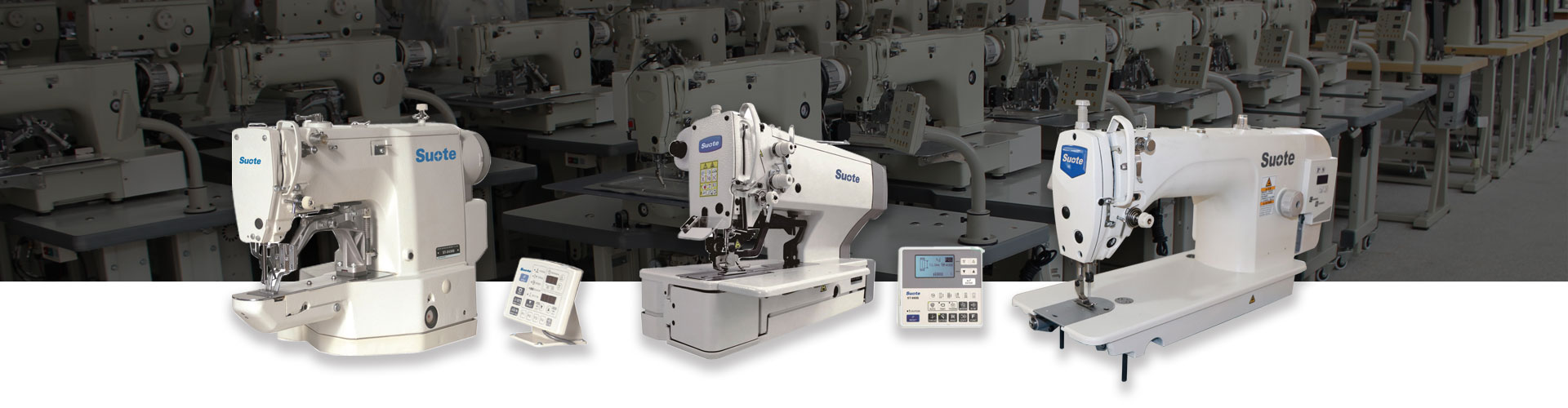
At SUOTE (Zhejiang Suote Sewing Machine Mechanism Co., Ltd.), the engineering approach to precision manufacturing extends across multiple product lines. Located in Yueqing City, Zhejiang Province, China, the company operates from a 40,000-square-meter facility established in 2000 and has developed specialized machinery backed by years of production experience. The same commitment to precision automation that drives their Automatic Pocket Welting Machine Double Needle Lockstitch Head informs their approach to gasket manufacturing equipment. The company’s quality control systems and continuous innovation focus support workshops seeking reliable automated solutions.
Technical Specifications at a Glance
Understanding machine capabilities is essential when evaluating whether an automatic winding machine suits your specific production requirements. While different manufacturers offer varying configurations, the following table outlines key technical parameters typical of modern automatic spiral wound gasket winding machines:
| Parameter | Typical Specification | Production Impact |
|---|---|---|
| Production diameter range | 15mm to 500mm (standard), up to 1600mm (horizontal configuration) | Accommodates ANSI standard sizes from small instrumentation flanges to large pipeline connections |
| Production speed | 12–30 seconds per piece (ANSI 2"–6" standard sizes) | Enables high-volume production with rapid changeover between sizes |
| Gasket types supported | With inner ring / without inner ring | Flexibility to produce standard and customized configurations |
| Control system | PLC with touchscreen interface | Intuitive operation with repeatable program storage |
| Machine dimensions (approx.) | 1400×1050×1650mm to 1200×900×1750mm | Fits standard workshop layouts; multiple units can be positioned efficiently |
| Net weight | 400–500kg | Stable operation without excessive floor loading requirements |
| Winding method | Vertical (standard) / Horizontal (large diameter) | Horizontal configuration optimized for flatness on big-size gaskets |
| Spot welding | Automatic, integrated | Consistent weld quality without operator intervention |
| Steel hoop feeding | Automatic, with servo motor control | Precise tension control throughout winding cycle |
| Filler feeding | Automatic graphite conveying device | Uniform filler distribution for superior sealing performance |
These specifications demonstrate that automatic winding machines are not merely incremental improvements over manual methods—they represent a fundamental shift in production capability. The ability to produce gaskets with consistent winding density, precise diameter control, and automatic spot welding transforms what workshops can achieve.
Industry Applications Driving Automation Demand
Spiral wound gaskets find application across a remarkably broad range of industrial sectors. Understanding these applications helps gasket workshops appreciate the market opportunities accessible with automated production capabilities.
Oil and Gas
The oil and gas industry represents one of the largest consumers of spiral wound gaskets. These gaskets are used extensively in refineries, natural gas processing facilities, offshore platforms, and pipeline connections. They are ideal for hydrocarbon processing and refining applications where leakage control is critical and the operating environment is aggressive.
Spiral wound gaskets have long been used as sealing elements in refineries, chemical plants, gas installations, water treatment plants, and general pipeline construction. For these applications, consistent gasket quality directly impacts safety, environmental compliance, and operational uptime.
Chemical and Petrochemical Processing
Chemical plants demand gaskets that withstand corrosive media, wide temperature ranges, and pressure fluctuations. Spiral wound gaskets manufactured with 316L stainless steel winding and flexible graphite or PTFE filler provide excellent sealability, heat resistance, and chemical resistance across various fluids. The use of 316SS stainless steel with enhanced corrosion resistance is ideal for the harsh environments typical of oil, gas, petrochemical, and chemical operations.
Power Generation
From conventional thermal power plants to nuclear facilities, gaskets play critical roles in steam systems, cooling circuits, and containment boundaries. Spiral wound gaskets provide the compression recovery needed to maintain seals through thermal cycles, making them indispensable in power generation applications.
Food and Beverage
Even food processing and beverage production facilities utilize spiral wound gaskets, particularly in steam systems, heat exchangers, and sanitary piping where seal integrity is essential for product quality and safety.
Materials Knowledge: Stainless Steel and Filler Selection
Workshop operators considering automatic winding machine investment should understand the materials they will process. Spiral wound gasket performance depends heavily on appropriate material selection for both the metal winding and the filler.
Metal Winding Materials
316L stainless steel is a common winding material for spiral wound gaskets, offering temperature resistance from -150°F to 1400°F (-100°C to 760°C). The metal strip is typically V-shaped or W-shaped, wound together with non-metallic filler through lamination and spiral winding, with spot welding applied at the ends to secure the structure.
Filler Materials
Flexible graphite and PTFE represent the two primary filler materials used in spiral wound gaskets. Each offers distinct advantages:
| Filler Material | Key Characteristics | Typical Applications |
|---|---|---|
| Flexible Graphite | Excellent heat resistance; good chemical resistance; requires 5-10% lower seating stress than PTFE | High-temperature steam systems; refineries; heat exchangers |
| PTFE | Exceptional chemical resistance; wider chemical compatibility range | Chemical processing; aggressive media; pharmaceutical applications |
| Mica | High-temperature stability; oxidation resistance | Extreme temperature applications; specialized industrial processes |
For workshops seeking to integrate precision automation across their manufacturing operations, SUOTE’s engineering expertise provides a foundation. The same precision that characterizes an Automatic Pocket Welting Machine Double Needle Lockstitch Head extends to automated winding solutions designed for gasket production. Each Automatic Pocket Welting Machine Double Needle Lockstitch Head produced by SUOTE reflects the company’s commitment to quality control and continuous innovation. Whether configuring an Automatic Pocket Welting Machine Double Needle Lockstitch Head for garment applications or adapting similar automation principles for gasket winding, the underlying engineering discipline remains consistent.
Frequently Asked Questions
What specific quality improvements can an automatic winding machine deliver compared to manual winding?
Automatic winding machines deliver measurable quality improvements across multiple dimensions. First, they eliminate operator-induced variability in winding tension—the same program applies identical tension to every gasket. Second, they ensure uniform filler distribution through controlled feeding mechanisms, preventing the voids or over-concentration common in manual operations. Third, automatic spot welding produces consistent weld placement and penetration, reducing the risk of gasket unwinding during service. Research indicates that winding density significantly affects sealing behavior, and automatic systems maintain optimal density throughout production runs. Additionally, modern automatic machines with PLC control can store production parameters for each gasket type, enabling rapid, repeatable changeovers between different specifications. For workshops supplying industries with strict quality requirements, the documentation traceability provided by automated systems also supports compliance with standards like ASME B16.20.
How does the production speed of an automatic winding machine translate into real workshop output?
Production speed specifications must be interpreted in the context of overall workshop operations. A typical automatic winding machine produces a standard ANSI 2" spiral wound gasket in approximately 12 seconds, with 6" gaskets requiring 18-30 seconds depending on machine configuration. However, the most significant productivity gains come from multi-machine operation. One operator can supervise five automatic winding machines simultaneously, reducing labor cost per gasket by up to 80% compared to one-operator-per-machine manual configurations. The machines continue production without operator intervention between cycles, meaning a single eight-hour shift can produce thousands of standard gaskets. For large-diameter gaskets exceeding 500mm, horizontal winding machines with servo motor drive maintain productivity while solving flatness issues that typically require rework in manual production. Workshops should consider both cycle time and labor efficiency when calculating return on automation investment.
What are the key considerations when selecting an automatic winding machine for a workshop that produces diverse gasket sizes?
Several factors should guide the selection process for workshops handling varied gasket specifications. Diameter range is the primary consideration—standard vertical winding machines typically accommodate 15mm to 500mm, sufficient for most industrial flange sizes up to ANSI 20". Workshops producing larger diameters up to 1600mm should consider horizontal configurations. Material handling capabilities matter as well: confirm that the machine can process both pre-formed stainless steel strips in pancake form and flat strip from spools of 20-25 kilograms. The control system interface should allow quick program changes between different gasket types, ideally with touchscreen operation and program storage for frequently produced specifications. For workshops that produce both gaskets with inner rings and without inner rings, verify that the machine supports both configurations. Finally, evaluate the automatic filler feeding system—newly designed guide components significantly improve finish quality on both sides of the gasket. Workshops should request demonstrations using their typical gasket specifications before committing to any equipment.
Integration with Workshop Operations
Implementing automatic winding machines requires thoughtful integration into existing workshop workflows. The following considerations help ensure successful adoption:
Floor Space Planning
Standard automatic winding machines typically occupy approximately 1200×900×1750mm to 1400×1050×1650mm of floor space. Multi-machine configurations require adequate space for operator movement between units, raw material storage, and finished gasket collection. However, the space efficiency of automatic machines is generally superior to manual workstations when comparing per-unit output.
Training Requirements
While automatic winding machines reduce reliance on highly skilled winders, operators still require training in program setup, material loading, quality verification, and basic maintenance. Most manufacturers provide comprehensive training programs covering these aspects. The learning curve is substantially shorter than for manual winding mastery, allowing workshops to deploy new operators more quickly.
Quality Assurance Integration
Automatic machines facilitate integrated quality assurance. By storing production parameters and automatically recording each gasket’s winding data, workshops can provide customers with documented traceability that manual operations cannot match. This capability is increasingly valuable when supplying projects that require full material and production certifications.
The Role of Precision Manufacturing in Gasket Workshop Evolution
The gasket manufacturing industry is evolving toward greater automation, driven by customer demands for consistent quality, regulatory requirements for documentation, and competitive pressure to improve productivity. Workshops that continue relying on manual winding methods will increasingly struggle to compete against automated operations that produce superior products at lower per-unit costs.
SUOTE represents an example of precision manufacturing capability that gasket workshops can reference when considering automation partners. The company’s specialization in automated machinery, backed by a 40,000-square-meter facility and years of production experience, demonstrates how dedicated engineering attention produces reliable equipment. Whether examining an Automatic Pocket Welting Machine Double Needle Lockstitch Head for garment applications or exploring automated winding solutions for gaskets, the underlying principle remains constant: precision automation improves consistency, reduces variability, and enhances overall manufacturing capability.
Conclusion
Returning to the question posed at the outset—Could an automatic winding machine be the upgrade your gasket workshop needs? —the answer depends on specific workshop circumstances. However, for most commercial gasket producers serving demanding industrial customers, the evidence strongly favors automation.
The market is growing. Global industrial gaskets demand is projected to increase substantially through 2034, with spiral wound gaskets remaining central to sealing applications across oil and gas, chemical processing, and power generation. Quality requirements are becoming stricter. ASME standards specify exacting parameters for strip thickness, winding pitch, and filler density that automatic machines consistently achieve. Labor challenges are intensifying. Skilled winders are retiring, and new operators take months to reach acceptable productivity levels with manual methods.
Automatic winding machines address all these challenges while providing additional benefits: documented quality traceability, reduced rework, lower labor costs per unit, and the ability to scale production without proportionate staffing increases.
For workshop managers evaluating this upgrade, the recommendation is to begin with a thorough analysis of current production data. Calculate current reject rates, average production speeds, labor costs per gasket, and customer quality complaints. Compare these figures against typical improvements reported by workshops that have automated their winding operations. The gap between manual and automatic performance is often substantial enough to justify the investment within a predictable timeframe.
The gasket manufacturing landscape is changing. Workshops that embrace automation will be positioned to capture growing market demand with consistent quality and competitive pricing. Those that delay risk being left behind as customers increasingly specify automated manufacturing for critical sealing applications.