

- English
- ελληνικά
- Esperanto
- Afrikaans
- tiếng Việt
- Italiano
- שפה עברית
- Cymraeg
- العربية
- Gaeilge
- český
- Eesti Keel
- Galego
- Indonesia
- Español
- русский
- Nederlands
- Português
- Norsk
- Türkçe
- Lietuvos
- Latviešu
- Pilipino
- ภาษาไทย
- Română
- icelandic
- Polski
- беларускі
- Français
- български
- український
- Hrvatski
- Deutsch
- Kreyòl ayisyen
- Dansk
- فارسی
- हिन्दी
- Suomi
- magyar
- 日本語
- 한국어
- Svenska
- Slovenský jazyk
- Malti
- Malay
- አማርኛ
- Bosanski
- Latine
- ລາວ
- Hawaiian
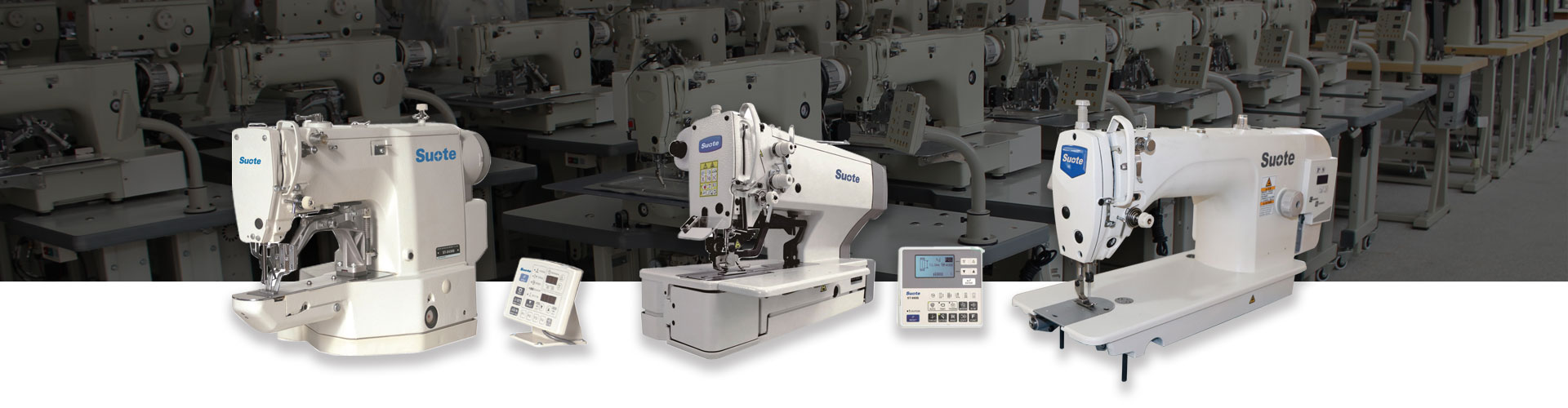
How Can a Template Sewing Machine Improve Quality and Output in Modern Garment Production?
Blog
In garment manufacturing, consistency is often harder to achieve than speed. A line may move fast, operators may work hard, and material may be expensive, yet the final output still suffers from uneven stitching, unstable quality, repetitive rework, and rising labor pressure. That is exactly why more factories are rethinking their production flow around the Template Sewing Machine.
As I look at how sewing operations are evolving, one thing becomes clear: buyers are no longer searching for a machine that simply stitches. They want equipment that helps them reduce dependency on operator skill, stabilize every repeat cycle, and handle demanding orders without sacrificing appearance or efficiency. In that context, Zhejiang Suote Sewing Machine Mechanism Co.,Ltd enters the discussion naturally as a manufacturer associated with this product category and with solutions aimed at structured sewing tasks across apparel and related sewn products.
In this article, I will break down what a Template Sewing Machine actually helps solve, where it creates value, what buyers should examine before purchasing, and how the right setup can turn a chronic sewing bottleneck into a repeatable production advantage.
Article Summary
A Template Sewing Machine is designed to improve sewing consistency, reduce operator variation, and simplify complex or repetitive stitching processes. It is especially valuable for manufacturers dealing with strict quality requirements, labor shortages, difficult shapes, and frequent rework. This article explains the practical benefits of template-based sewing, compares it with conventional operations, outlines the key buying points, and answers common questions from production managers and sourcing teams.
Table of Contents
- What Will This Article Cover?
- What Problems Does a Template Sewing Machine Actually Solve?
- Why Do Traditional Sewing Methods Struggle With Repeatability?
- How Does a Template Sewing Machine Improve Daily Production?
- Which Products and Materials Benefit Most From Template Sewing?
- What Should Buyers Check Before Choosing a Machine?
- How Can Buyers Compare Conventional Sewing and Template Sewing?
- What Mistakes Should Factories Avoid Before Purchase?
- What Questions Do Buyers Ask Most Often?
- How Should You Move Forward?
Outline
- Define the operational pain points behind inconsistent sewing output.
- Explain why manual alignment and skill-dependent sewing limit scalability.
- Show how a Template Sewing Machine helps standardize quality.
- Explore suitable product types, materials, and production environments.
- List the key checkpoints buyers should review before selecting a model.
- Compare workflow impact, labor stability, and quality results in a simple table.
- Answer practical questions from factories, brands, and sourcing teams.
Section 1
What Problems Does a Template Sewing Machine Actually Solve?
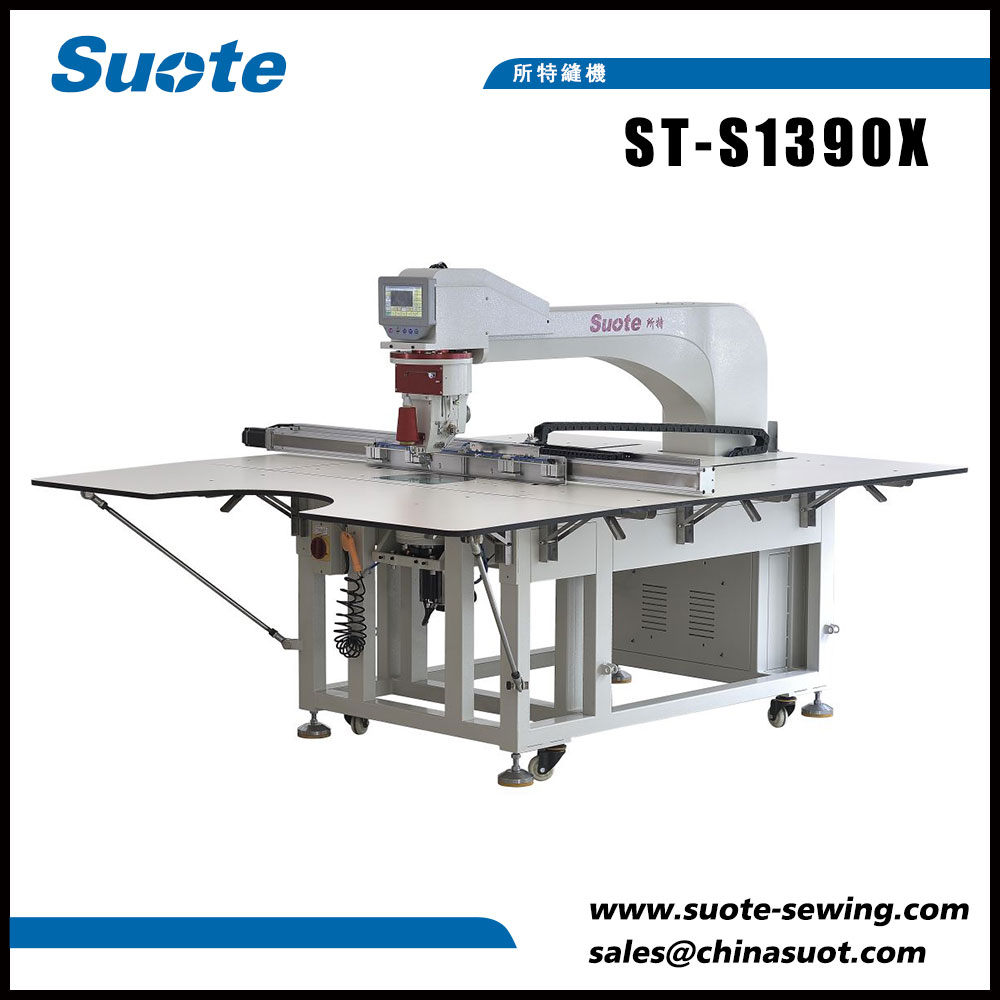
Most factories do not begin searching for a Template Sewing Machine because they want to follow a trend. They begin searching because something in their current process keeps going wrong. Sometimes the issue is inconsistent stitching on repeated shapes. Sometimes it is poor symmetry. Sometimes the machine operator can produce a beautiful result on one day and a weak result on the next. And often, the hidden cost is not visible in one bad seam, but in cumulative delays, rejected pieces, and additional training pressure.
In my view, buyers usually arrive with one or more of these production pains:
- Frequent variation between operators on the same sewing task
- High rework rates for pocket shapes, labels, decorative patterns, or reinforcement areas
- Difficulty maintaining appearance standards at higher output levels
- Overreliance on highly experienced workers for repeat orders
- Long training time for new staff
- Unstable production when order structure changes quickly
A good machine purchase is rarely about adding one more device to the workshop. It is usually about removing one recurring weakness from the production chain.
That is where template-guided sewing becomes valuable. Instead of depending on the operator to manually control every contour, reference point, and repeated path, the process becomes far more controlled and predictable. This is especially important when buyers are supplying brands or clients who expect visual consistency across thousands of pieces.
Section 2
Why Do Traditional Sewing Methods Struggle With Repeatability?
Conventional sewing methods can still be effective in many workshops, but they often become vulnerable when the product requires precision at scale. A straight seam is one thing. A repeated shaped seam, reinforcement pattern, or fixed-position sewing operation is another. The more the process relies on hand alignment, hand guidance, and operator memory, the more likely it is to produce variation.
I often see three core reasons behind this problem:
- Manual positioning introduces drift — even minor movement in material placement changes the final result.
- Operator technique is uneven — not every worker turns corners, controls pressure, or maintains stitch paths in the same way.
- Fatigue affects quality — repetition can reduce attention, especially on long shifts and high-volume orders.
Once these factors combine, factories start to lose more than appearance. They lose planning confidence. They cannot estimate output accurately, because sewing time and correction time become unstable. They cannot promise the same standard across multiple operators, because quality becomes person-dependent. For production leaders, that is a risky place to stay.
Section 3
How Does a Template Sewing Machine Improve Daily Production?
A Template Sewing Machine improves production not by magic, but by structure. It helps bring consistency to operations that are otherwise vulnerable to manual fluctuation. The template acts as a guide for positioning and sewing, which means the machine can support uniform placement, repeated path accuracy, and more stable results from one cycle to the next.
In practical factory terms, that usually means:
- More consistent seam appearance
- Reduced dependence on highly specialized labor
- Faster learning curve for repetitive operations
- Improved handling of shaped or fixed sewing areas
- Lower correction rates and less hidden labor waste
- Better confidence when scaling repeat orders
It is also worth noting that template-based sewing supports process discipline. Once a factory standardizes a task, the result becomes easier to reproduce across shifts, operators, and batch changes. That matters to buyers who care not only about machine features, but about whether the machine can support a more reliable production system.
| Production Concern | Common Manual Challenge | Template-Based Advantage |
|---|---|---|
| Shape consistency | Operator follows shape by hand with variable accuracy | Guided sewing path helps keep the result more uniform |
| Training pressure | New workers need longer practice to match experienced staff | Standardized handling reduces the learning burden |
| Rework frequency | Misalignment and uneven appearance create rework | More controlled positioning improves first-pass success |
| Repeat order stability | Quality changes depending on who is sewing | Repeat operations become easier to replicate |
Section 4
Which Products and Materials Benefit Most From Template Sewing?
Not every sewing process needs a template-based setup. But when the operation requires repeated positioning, controlled contours, or stable quality over volume, the Template Sewing Machine becomes far more attractive.
In my experience, buyers often consider this type of machine for:
- Garment components that require repeated pattern sewing
- Pocket-related processes and shaped reinforcement areas
- Decorative or functional stitching with fixed outlines
- Labels, patches, emblems, and repeated small-area operations
- Bags, automotive interior items, seating applications, and other structured sewn products
- Products where visual consistency matters as much as seam strength
This is also why buyers should think beyond the phrase “template machine” as a general label. The real question is not whether the machine sounds advanced. The real question is whether their product has enough repeated structure to justify guided sewing. If the answer is yes, the efficiency and quality gains can become very meaningful.
Section 5
What Should Buyers Check Before Choosing a Machine?
Buyers sometimes focus too heavily on a machine photo or a short feature list. I think that is a mistake. A smart purchase starts with the sewing task itself. Before choosing a Template Sewing Machine, the buyer should ask what the machine must do in the real production environment.
I would review these points first:
- Product type — What exact sewing operation will the machine handle?
- Material range — Are you sewing light garments, structured textiles, heavier layered pieces, or mixed materials?
- Required consistency — Is the priority appearance, reinforcement, speed, or all three?
- Operator profile — Will skilled technicians use it, or does the line need a lower learning barrier?
- Order pattern — Are you running repeated high-volume styles or changing styles frequently?
- After-sales support — Can the supplier help with setup, troubleshooting, and application matching?
The strongest suppliers understand that buyers are not just buying metal, motors, or controls. They are buying process confidence. That is why communication matters. A serious manufacturer should be able to discuss application suitability, not just send a quotation sheet.
Section 6
How Can Buyers Compare Conventional Sewing and Template Sewing?
Buyers often ask whether template-based sewing is truly worth the change. I think the clearest answer comes from comparing the production effect rather than the sales language.
| Point of Comparison | Conventional Sewing | Template Sewing |
|---|---|---|
| Operator dependence | High | Lower for repetitive structured operations |
| Visual consistency | Can vary from worker to worker | More stable across repeated cycles |
| Training time | Often longer for precise tasks | Can be easier to standardize |
| Rework risk | Higher when alignment is manual | Reduced when positioning is controlled |
| Scalability for repeat orders | Depends heavily on labor skill | Usually better for stable repeated production |
That does not mean conventional sewing has no place. It still makes sense for flexible operations, simple seams, and low-structure work. But when factories need repeatability and cleaner process control, the Template Sewing Machine becomes much more compelling.
Section 7
What Mistakes Should Factories Avoid Before Purchase?
I have noticed that some buyers rush into machine selection because they are under immediate production pressure. That is understandable, but it often leads to poor matching. A machine that looks advanced on paper may still disappoint if the buyer has not defined the application clearly.
These are the mistakes I would avoid:
- Choosing a model before confirming the exact sewing process
- Ignoring material thickness, stiffness, and layer structure
- Assuming every template-based machine fits every product type
- Comparing suppliers only by price and not by application understanding
- Overlooking support for setup, operation guidance, and long-term maintenance
A better approach is to begin with the product sample, define the pain point, and then evaluate whether the machine can solve that specific problem in a repeatable way. That is a much stronger purchasing path than buying based on broad claims alone.
FAQ
What Questions Do Buyers Ask Most Often?
-
Is a Template Sewing Machine only suitable for large factories?
Not at all. It is especially valuable wherever repeated structured sewing creates quality instability. Smaller factories can benefit too if they want to reduce rework and improve repeatability. -
Can this type of machine help reduce operator skill pressure?
Yes. It can make structured sewing tasks less dependent on individual hand control, which helps standardize output and shorten the learning curve for certain operations. -
Is it useful only for garments?
No. It can also be relevant for sewn products that require repeated shape control, including certain bag, seat, and interior applications. -
What is the biggest advantage from a buyer’s perspective?
In my opinion, the biggest advantage is not speed alone. It is reliable repeatability. When output looks consistent from piece to piece, the entire production system becomes easier to manage. -
How should I start evaluating the right supplier?
Start with your actual sewing application, sample structure, and desired result. Then ask the supplier how their machine matches that process rather than asking only for a general catalog.
Conclusion
How Should You Move Forward?
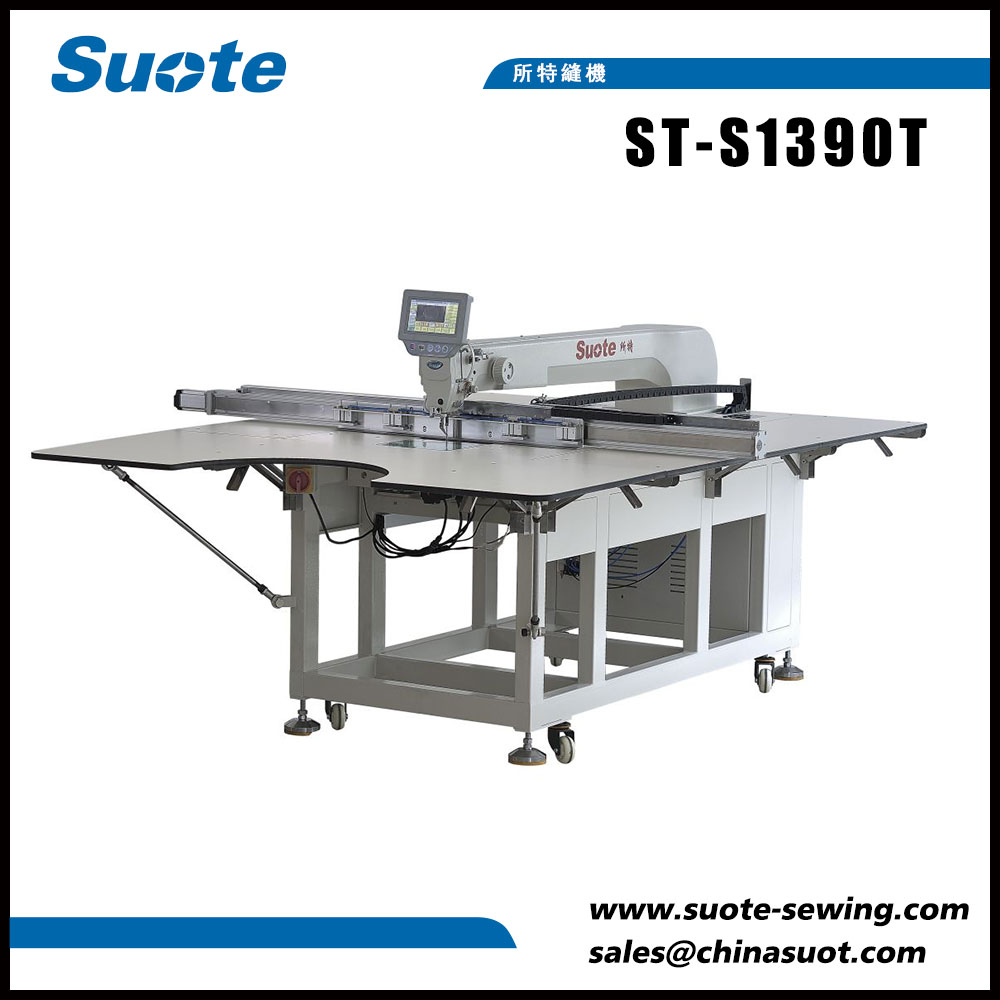
If your production line is losing time to repeat corrections, unstable seam appearance, or heavy dependence on individual operator skill, then it may be the right moment to take a serious look at the Template Sewing Machine. The best machine decision is not the one with the loudest feature list. It is the one that solves the exact bottleneck that keeps costing you time, money, and consistency.
For buyers who want better control over repeated sewing operations, cleaner output, and a more stable process, a thoughtful template-based solution can create a real operational upgrade. That is why working with an experienced manufacturer matters. A supplier should understand the sewing task behind the inquiry, not just the inquiry itself.
Contact
Do You Want a Better Sewing Solution for Your Production Line?
If you are exploring a reliable Template Sewing Machine for garments or other structured sewing applications, now is the right time to evaluate a solution that fits your production reality instead of forcing your process to adapt around limitations.
Zhejiang Suote Sewing Machine Mechanism Co.,Ltd can help you review your application needs, understand the most suitable machine direction, and move toward more stable, more efficient sewing performance. Contact us today to discuss your product requirements and find the right machine for your next order plan.