

- English
- ελληνικά
- Esperanto
- Afrikaans
- tiếng Việt
- Italiano
- שפה עברית
- Cymraeg
- العربية
- Gaeilge
- český
- Eesti Keel
- Galego
- Indonesia
- Español
- русский
- Nederlands
- Português
- Norsk
- Türkçe
- Lietuvos
- Latviešu
- Pilipino
- ภาษาไทย
- Română
- icelandic
- Polski
- беларускі
- Français
- български
- український
- Hrvatski
- Deutsch
- Kreyòl ayisyen
- Dansk
- فارسی
- हिन्दी
- Suomi
- magyar
- 日本語
- 한국어
- Svenska
- Slovenský jazyk
- Malti
- Malay
- አማርኛ
- Bosanski
- Latine
- ລາວ
- Hawaiian
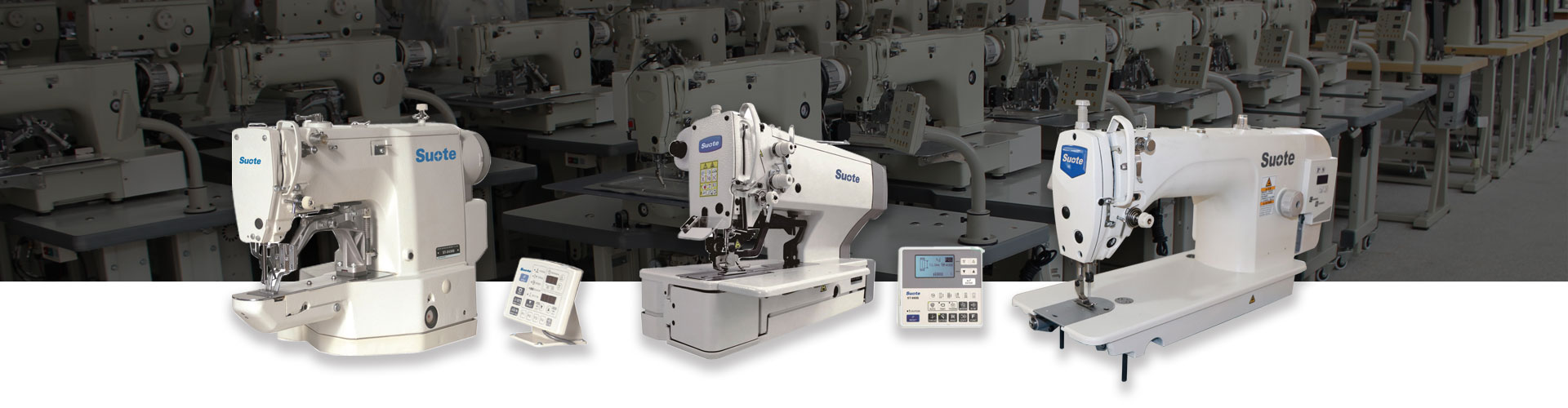
Why Does a Pattern Sewing Machine Change Production Quality So Quickly?
When manufacturers start struggling with inconsistent stitch paths, low output, operator fatigue, and rising labor pressure, the conversation usually turns to automation. That is exactly where Zhejiang Suote Sewing Machine Mechanism Co.,Ltd naturally enters the picture. A well-designed Pattern Sewing Machine is not just another piece of equipment on the floor. It becomes the control point for repeatability, product appearance, labor savings, and process stability across garments, bags, labels, shoes, automotive interiors, and many other sewn products. Buyers rarely need more theory. They need a practical answer to one question: will this machine solve the production problems that keep costing time and money?
Article Summary
This article explains how a Pattern Sewing Machine helps manufacturers solve common production pain points such as uneven quality, difficult operator training, material shifting, slow cycle times, and waste caused by rework. It also breaks down what buyers should evaluate before choosing a machine, where these machines deliver the best return, and why the right supplier matters as much as the machine itself. If you want a realistic, operations-focused guide instead of generic product language, this is the one to read.
Table of Contents
- What will this article cover
- Why do manufacturers look for a Pattern Sewing Machine
- Which products benefit most from this equipment
- What advantages matter in daily production
- How does automated pattern sewing compare with conventional sewing
- What should buyers check before choosing a machine
- Why does supplier capability affect long-term value
- What do buyers usually ask before ordering
- How should you move forward
Article Outline
- The real production bottlenecks that push factories toward automated sewing
- Typical use cases for a Pattern Sewing Machine in modern manufacturing
- The operational and quality benefits buyers should expect
- A side-by-side comparison between pattern sewing and manual process methods
- Key evaluation points for machine size, feeding stability, stitch accuracy, and programming convenience
- The role of supplier experience, support, and consistency in lowering risk
- Frequently asked questions from production managers, sourcing teams, and factory owners
Why do manufacturers look for a Pattern Sewing Machine
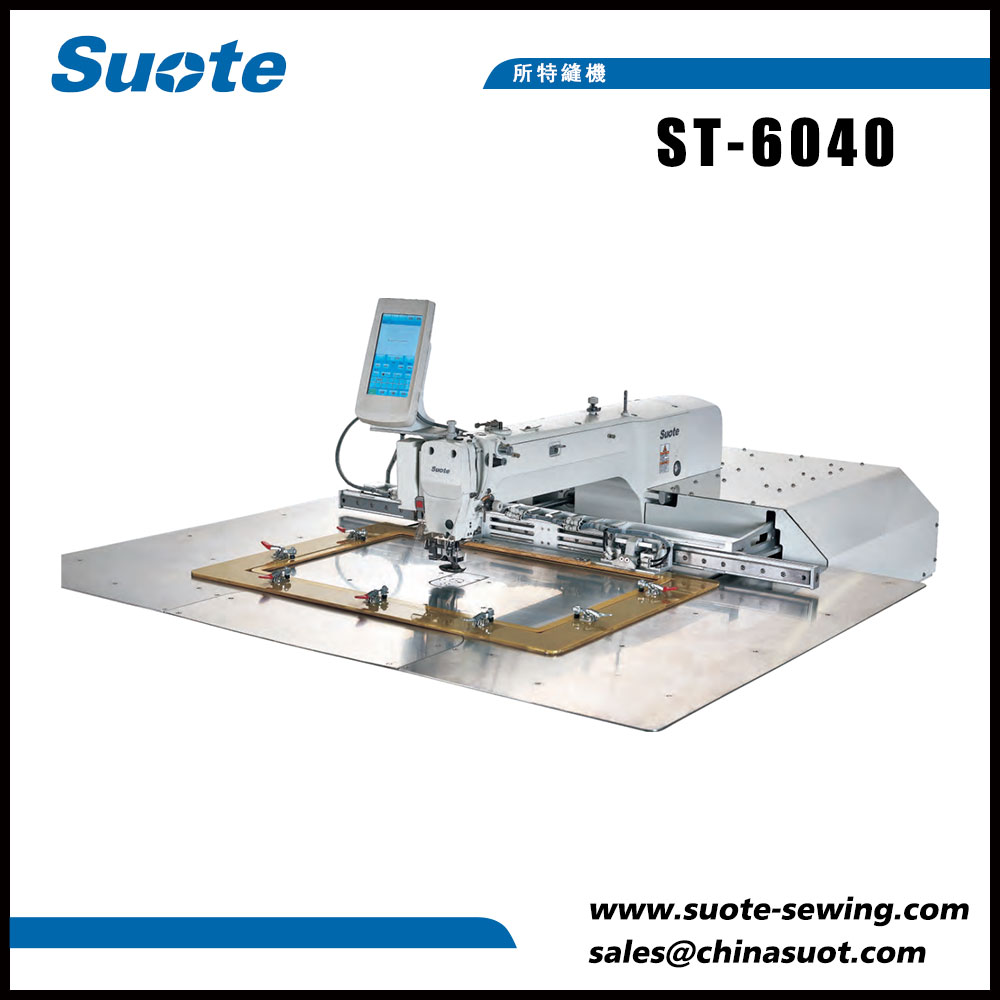
Most factories do not start shopping for a Pattern Sewing Machine because they simply want new equipment. They do it because their current process is hurting efficiency. In many sewing operations, the same problems repeat every day. Operators follow slightly different paths. Material layers shift. Decorative stitching loses shape. Labels land off-center. Small components become difficult to control. Skilled labor becomes expensive, yet output still depends too heavily on the person sitting at the machine.
In that environment, quality problems are rarely isolated. One unstable sewing step creates a chain reaction. Rework increases. Inspection pressure rises. Delivery schedules get tighter. Profit margins start shrinking quietly. That is why automated pattern sewing attracts so much attention. It converts a skill-dependent process into a repeatable process.
A good Pattern Sewing Machine is built to sew predefined stitch paths accurately and consistently. Instead of asking every operator to reproduce the same motion by hand, the machine executes the programmed pattern the same way each cycle. That one change improves not just appearance, but also process control.
Common factory pain points solved by pattern sewing equipment
- Unstable stitch shape across different operators
- Slow throughput on repeated sewing patterns
- High rework caused by misalignment or shifting materials
- Long training periods for complex sewing tasks
- Difficulty processing labels, logos, narrow openings, and shaped components
- Excessive dependence on a few experienced workers
Which products benefit most from this equipment
The appeal of a Pattern Sewing Machine comes from how flexible it is across industries. It is not limited to one niche. It is particularly useful wherever the sewing path must be controlled precisely and repeated at scale.
In apparel production, this often includes label attachment, logo stitching, reinforcement patterns, trouser components, and specialty sections where material movement creates risk. In bag manufacturing, it helps with patches, handles, reinforcement zones, and shaped decorative lines. In footwear, it supports structured components that need stable and repeatable sewing. In automotive and interior trim applications, consistency matters even more because visible quality standards are high.
Some manufacturers also need specialized formats, such as machines suited for small-mouth products, confined sewing areas, or large-format pattern fields. That matters because product geometry changes the machine requirement. A factory making jeans legs, boots, bags, or toys does not necessarily need the same configuration as a factory sewing large emblems or wide reinforcement panels.
| Industry | Typical Sewing Tasks | Why Pattern Sewing Helps |
|---|---|---|
| Garment | Labels, logos, pocket reinforcements, decorative patterns, narrow tubular sections | Improves consistency, reduces training pressure, and keeps placement accurate |
| Bags and luggage | Brand patches, reinforcement stitching, shaped panels, heavy-use zones | Controls stitch path and helps hold layered materials in place |
| Footwear | Upper components, labels, structural reinforcement areas | Supports repeatable stitching on parts where alignment is critical |
| Automotive interior | Labels, decorative stitching, trim parts, seat-related components | Delivers cleaner visual results and more stable cycle performance |
| Toys and specialty goods | Small openings, shaped parts, repetitive detail sewing | Reduces handling difficulty and improves repeatability |
What advantages matter in daily production
Buyers often hear broad claims about automation, but the real value of a Pattern Sewing Machine shows up in small, practical wins on the production floor.
-
More stable quality
The same pattern is sewn the same way again and again, which helps reduce operator-to-operator variation. -
Better material control
With proper clamping, feeding, and pressure control, the machine helps keep materials from drifting during sewing. -
Higher output
Repetitive sewing tasks move faster when operators are not manually tracing every shape. -
Cleaner product appearance
For visible stitching, logos, labels, and decorative structures, repeatability directly affects perceived product value. -
Shorter learning curve
A programmed process is easier to standardize than a fully manual sewing sequence that depends on hand skill. -
Lower rework and waste
When stitch paths, placement, and tension remain stable, defective pieces naturally decrease.
These advantages matter because factory profitability is usually shaped by repetition, not by one-time performance. A machine that saves a small amount of time or prevents a small number of mistakes in each cycle can create a major operational gain over weeks and months.
How does automated pattern sewing compare with conventional sewing
Not every process needs automation, so buyers should compare realistically. A conventional sewing machine still has value for general operations, repairs, flexible low-volume work, and tasks that change too often to justify programmed repetition. But once a pattern repeats frequently and quality tolerance becomes tighter, the balance shifts fast.
| Evaluation Point | Conventional Sewing | Pattern Sewing |
|---|---|---|
| Repeatability | Strongly depends on operator skill | High consistency once pattern is set |
| Training demand | Higher for complex paths | Lower once workflow is standardized |
| Cycle speed on repeated tasks | Usually slower | Usually faster and more consistent |
| Material shifting risk | Higher in difficult sections | Reduced through controlled feeding and clamping |
| Best for | Flexible general sewing | Structured, repetitive, accuracy-sensitive sewing |
| Output stability | Can fluctuate by shift and operator | Easier to keep stable across production batches |
That is why many factories do not fully replace conventional sewing. Instead, they upgrade the most repetitive, most quality-sensitive operations first. That is often the smartest way to introduce a Pattern Sewing Machine without disrupting the full line.
What should buyers check before choosing a machine
This is where many sourcing decisions go wrong. Buyers focus on price first, then discover later that the machine field size is wrong, the application fit is weak, or the control system is not convenient for production changes. A better approach is to evaluate from the process backward.
Start with these questions
-
What product are you sewing
Labels, logos, narrow openings, reinforced panels, or large-format patterns all require different handling characteristics. -
What sewing area do you need
The available sewing field directly affects which products the machine can process efficiently. -
How easily does your material shift
Slippery, layered, thick, or soft materials need better clamping and feeding control. -
How often will you change patterns
Frequent switching makes programming convenience and operator interface more important. -
What output target are you trying to reach
The right machine should match production volume rather than simply look advanced on paper. -
How strong is the supplier’s support
Spare parts access, setup guidance, and technical communication become critical after delivery.
If you are choosing carefully, it also helps to ask for sample sewing based on your actual material and product. That gives you more useful evidence than a generic machine description ever will.
Why does supplier capability affect long-term value
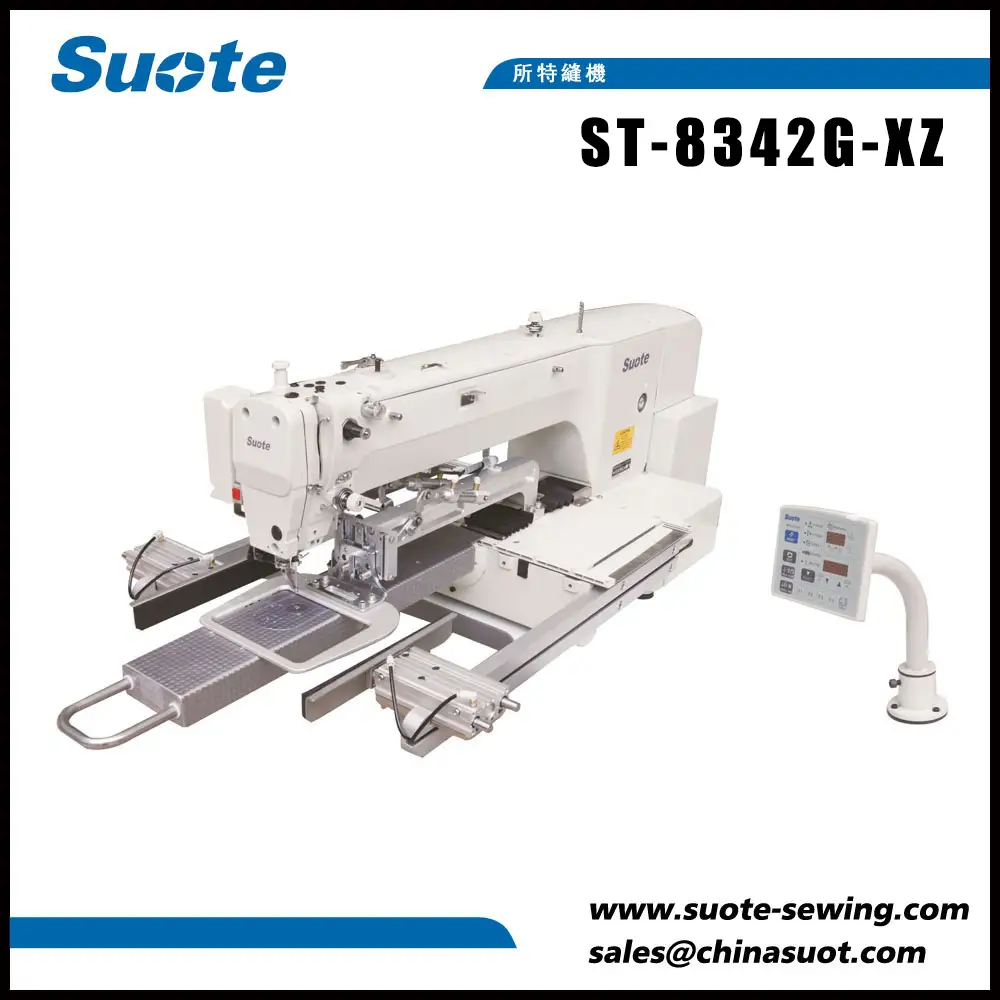
A machine purchase is never only about hardware. It is about whether the supplier understands the application behind the hardware. That is one reason buyers pay attention to manufacturers with long-term specialization in industrial sewing equipment.
Zhejiang Suote Sewing Machine Mechanism Co.,Ltd has built its reputation around specialized sewing machinery, and that matters because application-focused experience often shows up in the details buyers care about most: product fit, consistency, machine configuration, and communication around real production use. A supplier with experience in pattern sewing can better understand whether you need a standard electronic solution, a machine for small-mouth products, a logo or label application setup, or a configuration with a larger sewing area.
Buyers also gain more confidence when the supplier thinks beyond shipment. The real questions are practical ones. Can the machine match the product? Can the operation be standardized quickly? Can the supplier explain how to reduce material movement? Can they support application-specific needs rather than offering one generic answer to every factory?
That is the difference between buying a machine and building a reliable process. When a Pattern Sewing Machine is selected with application logic and backed by capable technical support, the investment tends to pay off faster and with less production friction.
What do buyers usually ask before ordering
Can a Pattern Sewing Machine really reduce labor dependence
Yes, especially in repetitive operations where quality currently depends too much on operator skill. It does not remove the need for operators, but it reduces how much output depends on individual hand control.
Is this machine only suitable for garments
No. It is widely used in garments, bags, footwear, labels, toys, and other products that require controlled and repeatable stitch patterns.
Will it help with material shifting
In many applications, yes. Proper feeding and clamping help stabilize the material during sewing, which is one of the biggest reasons factories adopt this type of equipment.
How do I know what machine size I need
Start with your largest sewing pattern, product shape, and handling method. The working area should fit your real product requirement, not just the average sample.
Is a Pattern Sewing Machine worth it for medium-sized factories
Very often, yes. Medium-sized factories usually feel the pain of labor cost and quality inconsistency most sharply. Even one upgraded operation can improve throughput and reduce rework.
What is the safest way to evaluate before purchase
Share your actual product, material, and process goal with the supplier. Sample testing and application discussion usually reveal the best machine choice much faster than comparing model names alone.
How should you move forward
If your factory is dealing with repeated sewing patterns, visible quality complaints, unstable output, or rising training costs, this is the right moment to review whether a Pattern Sewing Machine can improve your line. Zhejiang Suote Sewing Machine Mechanism Co.,Ltd offers specialized solutions for different sewing applications, and the right machine can make your production more consistent, more efficient, and much easier to manage. If you want to discuss your product requirements, compare machine options, or request a more suitable recommendation for your specific application, please contact us and start the conversation with a real production target in mind.